
Inflammation is at the root of many common health concerns—chronic pain, digestive issues, fatigue, hormonal imbalances, and even sleep disruption. The good news? What you eat every day can either fuel inflammation or help calm it.
In Traditional Chinese Medicine (TCM), food is more than just fuel—it’s medicine. Choosing the right foods can support your body’s natural balance, reduce inflammation, and improve how you feel day to day.
What Is Inflammation?
Inflammation is your body’s natural defence system. In the short term, it’s helpful—it helps you heal from injury or fight off illness.
But when inflammation becomes chronic (low-grade and ongoing), it can start to work against you. This type of inflammation is linked to:
- Joint pain and stiffness
- Headaches and migraines
- Digestive issues and bloating
- Fatigue and brain fog
- Hormonal imbalances (especially during menopause)
- Increased stress response
Over time, this smouldering inflammation may also contribute to serious conditions like arthritis, heart disease or diabetes. Chronic stress is a major driver of inflammation, which is why so many people notice their symptoms worsen during busy or overwhelming periods.
Food as Medicine in TCM
In TCM, food is one of the most powerful tools for maintaining balance in the body.
Rather than focusing solely on nutrients, TCM examines the energetic properties of food—how it affects digestion, circulation, and overall balance. When your system is out of balance (due to stress, hormonal shifts, or lifestyle), inflammation can show up in different ways.
An anti-inflammatory diet, from a TCM perspective, focuses on:
- Supporting digestion (Spleen and Stomach function)
- Reducing internal heat and stagnation
- Nourishing the body during times of depletion (like menopause)
This is especially important if you’re dealing with stress or hormonal changes, where the body is already under extra strain.
How an Anti-Inflammatory Diet Helps
Research indicates that an anti-inflammatory eating pattern can lead to significant symptom relief. Eating foods that fight inflammation can:
- Calm the nervous system
- Support hormone balance
- Improve digestion and reduce bloating
- Reduce pain and stiffness
- Stabilize energy levels
- Support better sleep
For many people, these changes are subtle at first—but they build over time into noticeable, lasting improvements. Over years of healthy eating, even serious flare-ups can be prevented. One large study found an anti-inflammatory diet helped cut the risk of gout by up to 60%. It also helped ease osteoarthritis pain. In practice, people often report not only less pain but also more energy as their inflammation subsides. Small changes added up over a few months can make a big difference.
Top Foods That Fight Inflammation
Here are some of the most effective anti-inflammatory foods to include regularly:
Produce
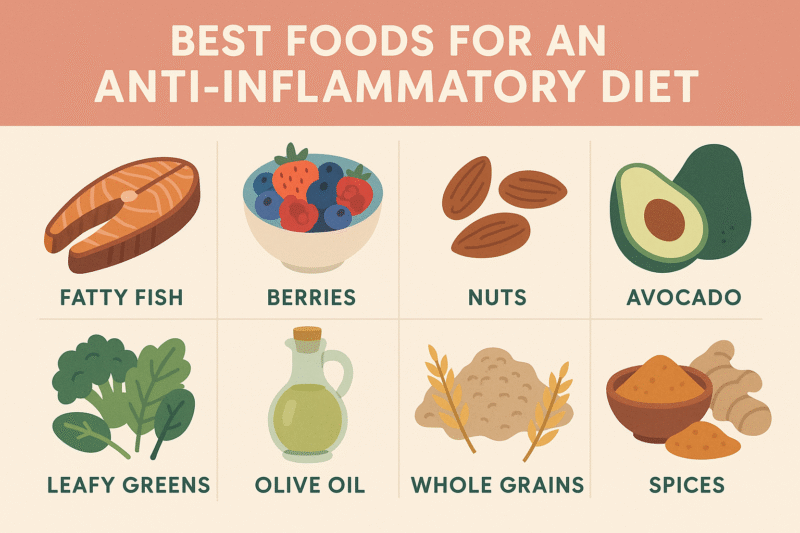
- Leafy greens: Spinach, kale, collards and other dark-green vegetables are high in vitamins, minerals and plant compounds. Harvard experts list green leafy vegetables as cornerstone anti-inflammatory foods. Their antioxidants help protect cells from inflammatory damage.
- Berries: Blueberries, strawberries, cherries and other brightly coloured berries contain anthocyanins and other antioxidants. These compounds have well-documented anti-inflammatory effects, helping to reduce chronic inflammation and protect against disease.
Proteins
- Fatty fish: Salmon, tuna, sardines and mackerel provide omega-3 fats that “reduce inflammation”. Studies show regular intake of these oily fish can ease joint pain and stiffness.
- Nuts and seeds: Almonds, walnuts, pistachios and similar nuts pack healthy fats, fiber and vitamin E. Multiple studies confirm that people who eat nuts regularly have lower levels of inflammatory markers. For example, one long-term study found that those eating the most nuts had about a 50% lower risk of dying from inflammatory disease than those eating the least.
Fats
- Extra-virgin olive oil: This healthy oil is loaded with monounsaturated fats and a natural anti-inflammatory ingredient called oleocanthal. Oleocanthal works much like a mild, natural NSAID to block inflammatory enzymes. (Mayo Clinic even suggests swapping lard or margarine for olive oil.)
- Avocado: Creamy and versatile, avocados are rich in monounsaturated fat, potassium, magnesium and fiber. In one study, adults with a high BMI who ate avocados daily for 12 weeks showed significant drops in inflammation markers (like IL‑1β and CRP) compared to those who didn’t.
Grains
- Whole grains: Foods like brown rice, oats, quinoa and barley are high in fiber. Fiber-rich whole grains help lower C‑reactive protein (CRP), a key marker of inflammation in the blood. Swapping refined grains (like white rice) for whole grains is an easy way to cut inflammation.
Other
- Spices: The best anti-inflammatory spices are turmeric and ginger. Turmeric’s active ingredient curcumin is a powerful anti-inflammatory compound. It has been shown to ease inflammation in arthritis, diabetes and other conditions. Ginger also contains natural anti-inflammatory chemicals. In fact, a controlled trial found that a ginger-turmeric supplement was as effective as the arthritis drug naproxen at reducing knee inflammation and pain (10). Adding these spices to meals or taking a supplement (after checking with your doctor) can boost your diet’s healing power.
- Drinks: Water is the best. Green tea and herbal teas are also good choices.
Foods That Can Increase Inflammation
Just as important as what to include is what to limit. Common inflammatory foods include:
- Processed and packaged foods
- Refined sugar
- Excess alcohol
- Deep-fried foods
- Highly processed vegetable oils
You don’t need to eliminate these foods —but reducing them can make a noticeable difference in how you feel. Gradually swapping these for the wholesome options above will help maximize your diet’s benefits.
Building Your Plate
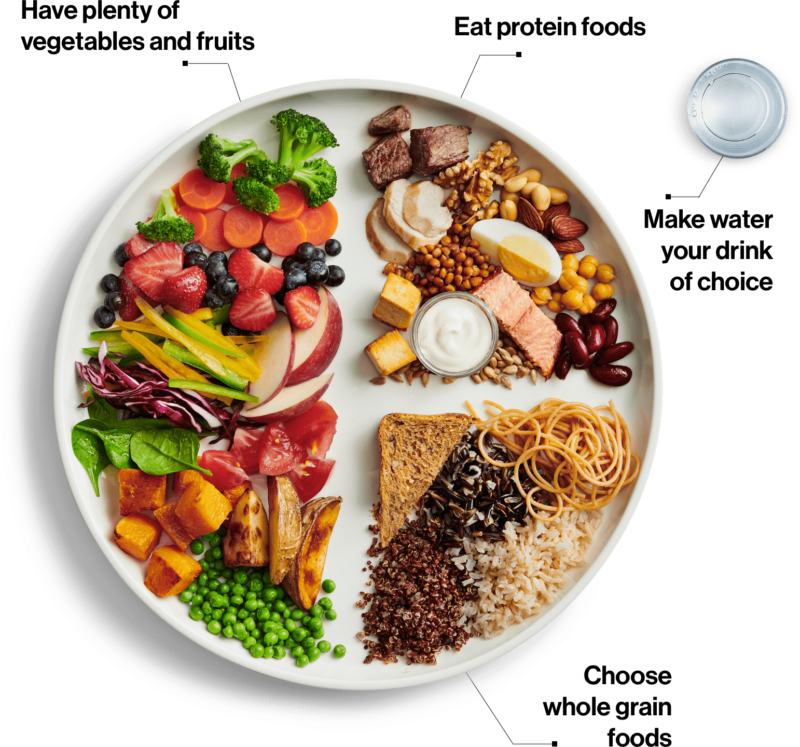
Putting these choices into practice can be simple. Think Mediterranean-style meals. Fill half your plate with vegetables, one quarter with a whole grain (or starchy vegetable), and one quarter with lean protein or oily fish. For breakfast, try oatmeal topped with berries and a sprinkle of nuts. Lunch could be a big salad of dark greens, beans, colourful veggies and chopped almonds. For dinner, grill salmon (or beans/legumes) with a side of brown rice and steamed broccoli drizzled with olive oil. Snack on fruit, yogurt or a handful of walnuts instead of chips. Over time these patterns become second nature.
The Stress–Inflammation Connection
If you’re constantly stressed, your body stays in a heightened inflammatory state.
This is where diet alone isn’t enough. Supporting your nervous system is key.
In my practice, I often see clients dealing with both high stress and inflammation-related symptoms—tight muscles, headaches, poor sleep, and hormonal imbalances. Addressing both at the same time leads to much better results.
Inflammation and Menopause
During menopause, hormonal shifts can increase inflammation in the body. This can show up as:
- Joint pain
- Hot flashes
- Sleep disturbances
- Increased sensitivity to stress
An anti-inflammatory diet becomes even more important during this stage. Nourishing, easy-to-digest foods help support the body through this transition and reduce the intensity of symptoms.
Conclusion: Small Steps, Big Rewards
You don’t need a perfect diet to see results. Small, consistent changes—like adding more whole foods, cooking meals at home, and reducing processed foods—can go a long way. As you add more anti-inflammatory foods, watch for small wins. Many people notice a bit more energy, less stiffness, or reduced swelling after a few weeks. Harvard experts also point out that a healthier diet can improve mood and quality of life, along with physical health.
Give yourself time (Cleveland Clinic suggests a few months) and start with one change at a time. With each healthy choice – a cup of spinach here, a salmon dinner there – you are helping your body heal. Keep going! Every bite matters on your path to feeling better.
And when you combine this with treatments like acupuncture, the effects are even stronger. Acupuncture helps regulate the nervous system, reduce inflammation, and support hormone balance—working hand-in-hand with your diet.
Ready to Take the Next Step?
If you’re dealing with chronic inflammation, stress, or menopause-related symptoms, a personalized approach makes all the difference.
Acupuncture and nutrition together can help you feel more like yourself again—calmer, more energized, and more balanced.
Learn More About Acupuncture in NE Calgary
Book a consultation or an acupuncture session in NE Calgary and get personalized support for menopause, headaches, and overall wellness.
Book Your Appointment


For more suggestions on healthy eating check out Canada’s Food Guide.
References
- Cleveland Clinic. (2023, February 8). Anti-inflammatory diet: What to know. [https://health.clevelandclinic.org/anti-inflammatory-diet-what-to-know]
- Harvard Health Publishing. (2021, November 16). Foods that fight inflammation. [https://www.health.harvard.edu/staying-healthy/foods-that-fight-inflammation](
- Harvard T.H. Chan School of Public Health. (n.d.). The nutrition source: Anti-inflammatory diet. [https://www.hsph.harvard.edu/nutritionsource/anti-inflammatory-diet/]
- Mayo Clinic. (2023, June 22). Anti-inflammatory diet: Your path to better health. [https://www.mayoclinic.org/healthy-lifestyle/nutrition-and-healthy-eating/expert-answers/anti-inflammatory-diet/faq-20057945]
- MedlinePlus. (2023, February 27). Anti-inflammatory diet. U.S. National Library of Medicine. [https://medlineplus.gov/ency/patientinstructions/000895.htm]
- National Center for Complementary and Integrative Health. (2022, March). Turmeric. [https://www.nccih.nih.gov/health/turmeric]
- O’Neil, C. E., Keast, D. R., Fulgoni, V. L., & Nicklas, T. A. (2015). Tree nut consumption improves nutrient intake and diet quality in U.S. adults: An analysis of NHANES 2005–2010. *Nutrients*, 7(6), 5959–5974. [https://doi.org/10.3390/nu7065959]
- Wang, Y., Yang, J., Zhang, P., Liu, Y., & Zhang, Y. (2021). The anti-inflammatory activity of avocado in overweight and obese adults: A randomized controlled trial. *Journal of Nutrition and Health*, 30(3), 177–184. [https://doi.org/10.1016/j.jnutbio.2021.108922]
- White, B. (2007). Ginger: An overview. *American Family Physician*, 75(11), 1689–1691. [https://www.aafp.org/pubs/afp/issues/2007/0601/p1689.html]
- Zhang, Y., Xie, C., Wang, H., Zheng, Y., & Fan, L. (2016). Curcumin in treating chronic inflammation: Clinical trials and future perspectives. *Phytotherapy Research*, 30(10), 1710–1721. [https://doi.org/10.1002/ptr.5674]

